
Park Slope Therapy Insights #02
At age 9, it's unfinished homework and constant reminders.
At age 16, it's hours of studying without the expected results.
At age 35, it's missed deadlines and the exhausting effort of staying organized, even in a successful career.
Different ages. Different circumstances. Sometimes, surprisingly similar challenges.
Perhaps you've noticed these difficulties in your child. Or maybe you've spent years managing them yourself. You've tried different strategies, found ways to compensate, and wondered whether it's simply a matter of working harder.
Why can it take years to understand what's happening?
Difficulties with attention, learning, or organization aren't always easy to explain. Anxiety, ADHD, learning disorders, and other conditions can share certain symptoms.
Someone may also perform well at school or work while putting considerable effort into managing challenges that others don't see. This can make it difficult to recognize when professional assessment might be useful.
When is it worth considering a Neuropsychological Evaluation?
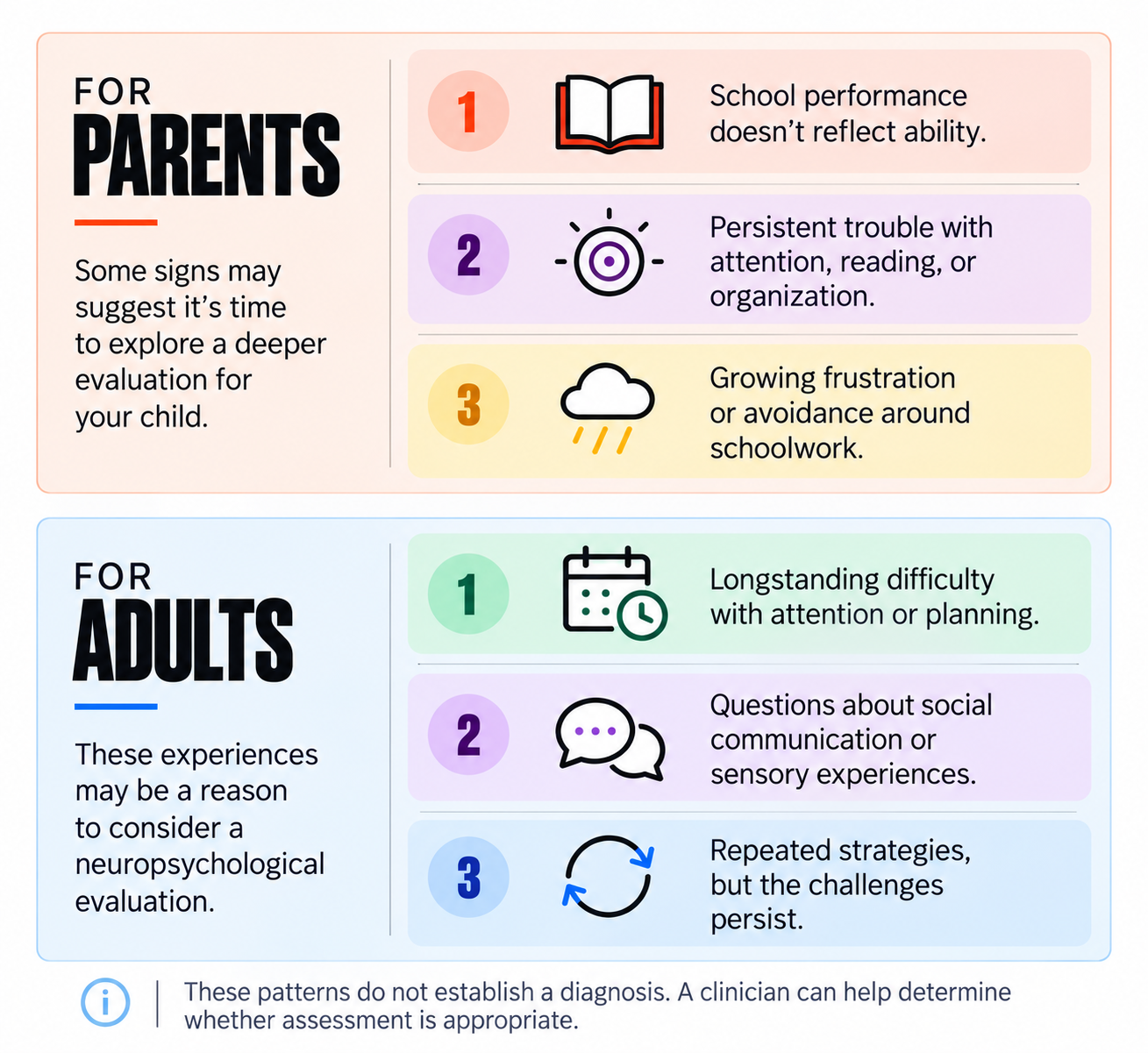
While these signs don't necessarily indicate a specific condition, they may be worth exploring with a qualified clinician to better understand what's going on.
What can an accurate evaluation change?
For a child, that might mean identifying appropriate learning supports at school or at home.
For an adult, it may help inform treatment decisions, possible accommodations, or a clearer understanding of longstanding difficulties.
Better information can lead to more informed decisions about what to do next.
At Park Slope Therapy, we offer pediatric neuropsychological evaluations, along with ADHD and autism evaluations for adults. Each assessment is designed to explore the relevant concerns and provide individualized recommendations that families and adults can use to consider their next steps.
If you have questions about your own experiences or concerns about your child, our team can help you explore whether an evaluation is an appropriate next step.