
Park Slope Therapy Insights #01
Imagine two nine-year-olds, Oliver and Noah.
Both spend hours trying to finish their homework. They get distracted, forget instructions, and need constant reminders to stay on task. From the outside, their struggles look almost identical. But what's happening beneath the surface could be very different.
OLIVER, AGE 9:
Oliver understands the material and does well in class. But by the time he gets home, he's exhausted. His attention slips, frustration builds, and homework becomes a nightly battle.
With better routines, breaks, and time to recharge, things gradually improve.
NOAH, AGE 9:
Noah also understands much of what he's learning, but his difficulties persist throughout the day. He loses track of multi-step instructions, struggles to organize his thoughts on paper, and often needs help figuring out where to begin.
Despite additional support, the same challenges keep appearing at home and at school.
So why do similar struggles respond to different solutions?
Let's look at this image:
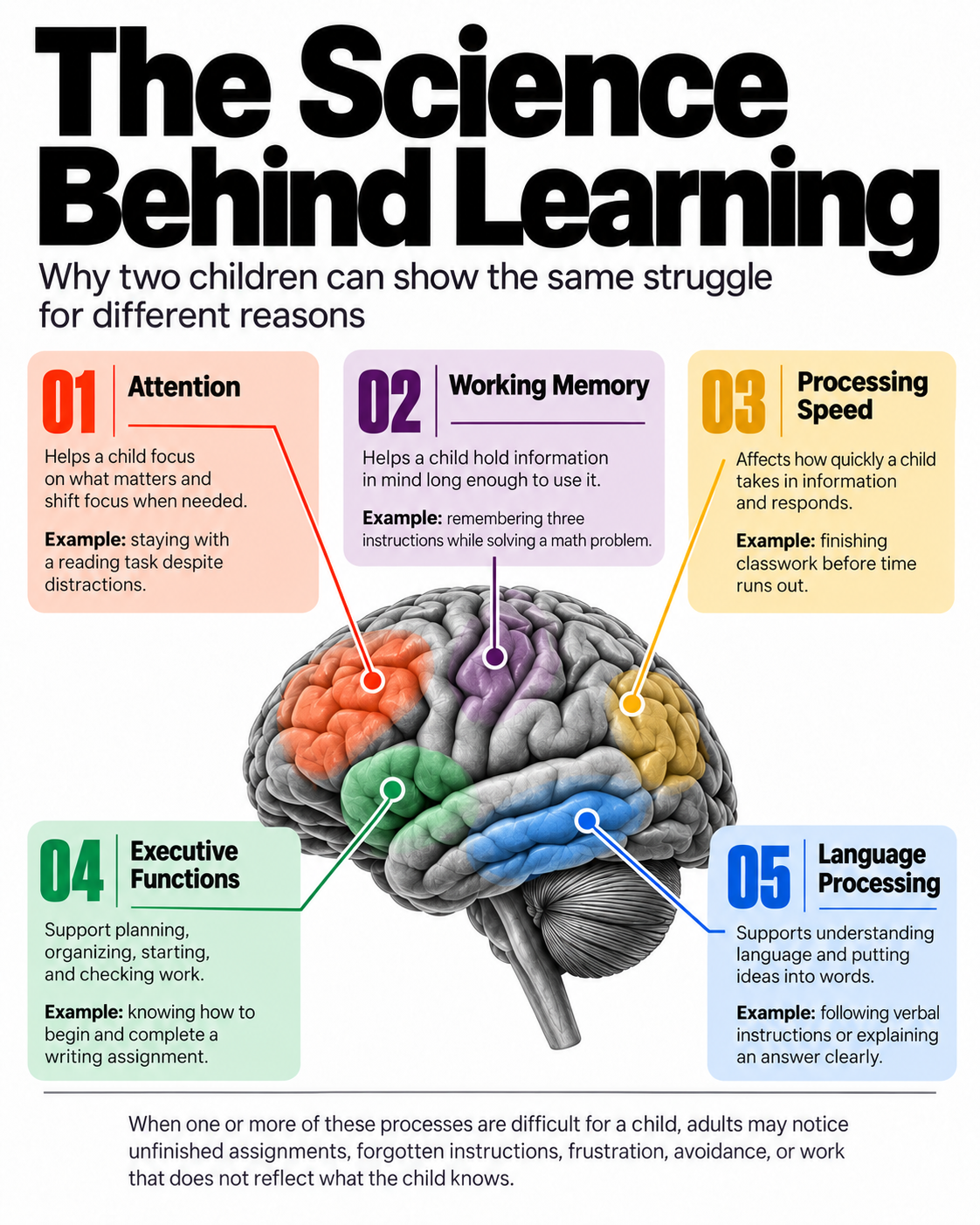
Learning depends on several cognitive processes working together.
When a child struggles with one or more of them, the difficulty may show up as something familiar: forgotten instructions, unfinished assignments, frustration, or avoidance.
By the time parents seek additional support, they've often tried tutoring, new homework routines, extra practice, or working more closely with teachers. Some children improve. Others, like Noah, continue struggling despite those efforts.
How do you solve a problem when you don't fully understand what's causing it?
For Noah, the question is worth investigating. Is he having trouble holding instructions in mind? Organizing information? Processing language? Could several factors be contributing to the same difficulties?
These questions can lead to very different approaches to supporting a child.
At Park Slope Therapy, a pediatric neuropsychological evaluation can help examine how a child's cognitive, academic, and emotional functioning may be contributing to persistent difficulties, providing information to guide more individualized recommendations.
If these concerns sound familiar, whether for your child or a family you know, our team can help you explore whether a neuropsychological evaluation or another form of support might be appropriate.